
Indian Poker: Complete Guide to Rules, Strategy, Online Play & Legal Status in India
Indian Poker is a unique and highly entertaining card game that blends psychology, bluffing, and quick decision-making into a simple yet intense format. Unlike traditional poker variants where players analyze their own hands, Indian Poker flips the script — you never see your own card, but everyone else does.
This single twist makes Indian Poker one of the most mentally engaging poker-style games played casually in India today. Whether you’ve seen it at house parties, college hostels, or online gaming apps, Indian Poker has carved out a loyal audience thanks to its simplicity and social appeal.
In this complete guide, we’ll cover everything you need to know about Indian Poker — from rules and gameplay to winning strategies, online platforms, and its legal status in India.
What Is Indian Poker?
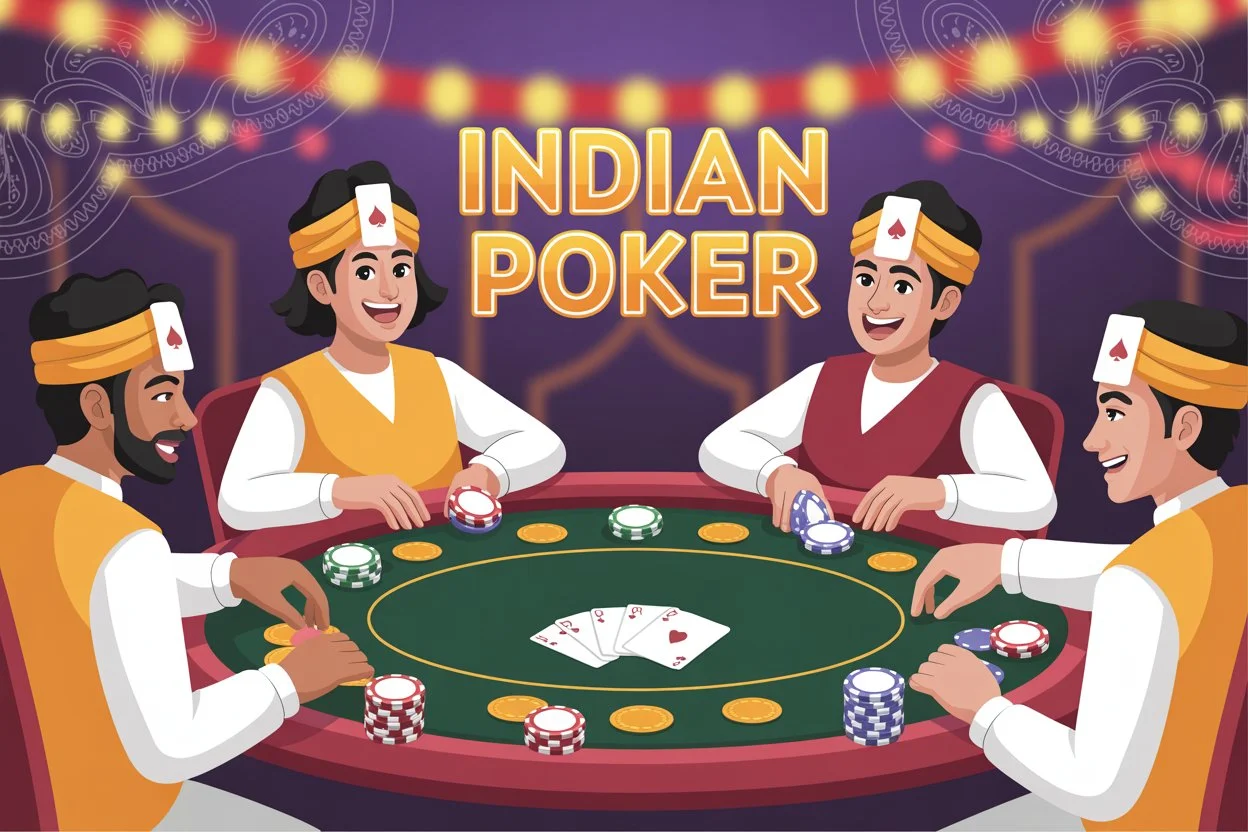
Indian Poker, often referred to as Blind Man’s Bluff Poker, is a one-card poker game where each player receives a single card but is not allowed to see their own card. Instead, the card is placed on the forehead, visible to all other players.
Players then place bets based on:
- The cards they see on other players
- Opponent behavior and betting patterns
- Psychological reads and bluffing instincts
At the end of the betting round, cards are revealed, and the highest-ranking card wins the pot.
Why Is It Called Indian Poker?
The name “Indian Poker” is more colloquial than official. While the game originated in Western social settings, it became widely popular in India due to:
- Its ease of play
- Minimal setup
- Strong emphasis on bluffing and mind games
In Indian social circles, the game adapted naturally into casual gatherings, making the nickname stick.
Indian Poker Rules: How to Play Step by Step
Indian Poker is easy to learn, making it ideal for beginners and casual players.
Number of Players and Cards Used
- Players: 3 to 6 (can be played with more)
- Deck: Standard 52-card deck
- Cards per player: 1
No jokers are used, and no complicated hand rankings are required.
Basic Gameplay Flow
- Each player is dealt one card face down
- Without looking at it, players place the card on their forehead
- Everyone can see other players’ cards — except their own
- A betting round begins
- Players may bet, raise, call, or fold
- After betting ends, players reveal their cards
- The player with the highest card wins
Ace is usually considered the highest card unless house rules state otherwise.
Betting Rules (Casual & Online Play)
- Betting is usually done in a single round
- Fixed or flexible betting limits may apply
- Online platforms often automate betting options
Because players lack information about their own card, betting decisions rely heavily on opponent reads.
Indian Poker Card Ranking
Indian Poker uses a simple high-card ranking system:
- Ace (highest)
- King
- Queen
- Jack
- 10 → 2 (lowest)
There are no suits or hand combinations like pairs or straights — only the highest card matters.
Indian Poker vs Other Poker Variants
Indian Poker vs Texas Hold’em
Understanding how Indian Poker differs from popular games helps players choose the right format.
| Feature | Indian Poker | Texas Hold’em |
|---|---|---|
| Cards per player | 1 | 2 private + 5 community |
| Information | See others’ cards | See your own cards |
| Skill focus | Psychology & bluffing | Math, odds & strategy |
| Speed | Fast | Moderate |
| Complexity | Very simple | Advanced |
Indian Poker is more about people-reading, while Texas Hold’em rewards analytical decision-making.
Indian Poker vs Teen Patti (Indian Flush)
Teen Patti is deeply rooted in Indian culture, especially during festivals like Diwali.
Key differences:
- Teen Patti uses 3 cards
- Indian Poker uses 1 card
- Teen Patti involves hand rankings
- Indian Poker focuses on opponent perception
Both games rely on bluffing, but Indian Poker is more psychological and less technical.
Why Indian Poker Is Popular in India
Indian Poker has gained popularity for several reasons:
- Easy rules for beginners
- Highly social and entertaining
- Minimal equipment required
- Works well in offline and online formats
- Strong focus on bluffing — a skill Indians enjoy mastering
Its simplicity makes it perfect for house parties, college games, and casual online sessions.
How to Play Indian Poker Online in India
With the rise of online gaming, Indian Poker has found a new home on digital platforms.
Where Can You Play Indian Poker Online?
While Indian Poker is not always listed as a standalone game, it often appears under:
- Blind Man’s Bluff
- Casual poker variants
- Social poker rooms
Popular platforms include:
- MPL (Mobile Premier League)
- Adda52 (occasionally in private rooms)
- PokerStars India (community formats)
- Casual gaming apps and private rooms
Some platforms offer free practice games, while others allow real-money play.
Free vs Real-Money Indian Poker
Free Games
- Best for beginners
- No financial risk
- Ideal for learning bluffing
Real-Money Games
- Higher psychological pressure
- Requires bankroll management
- Legal status depends on state laws
Always verify platform legality before playing with real money.
Is Indian Poker Legal in India?
The legality of Indian Poker depends on state-level laws.
Skill vs Chance Debate
Under Indian law:
- Games of chance are restricted
- Games of skill are generally allowed
Courts have ruled poker to be a game of skill in several states, based on:
- Decision-making
- Player psychology
- Betting strategy
States where poker is often permitted include:
- Karnataka
- West Bengal
- Nagaland
- Sikkim
However, some states restrict online real-money gaming. Always check your local regulations.
Indian Poker Winning Strategies
Although Indian Poker involves randomness, smart strategies can significantly improve your chances.
1. Observe Opponent Reactions Carefully
Since you see others’ cards, watch how players react when they look at your forehead card:
- Nervous smiles
- Overconfidence
- Hesitation before betting
These reactions often reveal how strong or weak your card might be.
2. Control Your Own Body Language
Avoid giving away information through:
- Facial expressions
- Sudden betting changes
- Overconfidence
A neutral demeanor keeps opponents guessing.
3. Bluff Strategically
Bluffing is central to Indian Poker:
- Raise confidently when opponents appear weak
- Fold early if everyone bets aggressively against you
- Mix your betting patterns to stay unpredictable
4. Manage Your Bankroll
Whether playing casually or online:
- Set a loss limit
- Avoid chasing losses
- Use small bets to gather information
Bankroll discipline separates good players from reckless ones.
5. Read Betting Patterns
Players often bet based on what they see:
- Quick raises may signal confidence
- Slow calls can indicate uncertainty
Learning these patterns gives you a major edge.
Common Mistakes Beginners Make
Avoid these mistakes to improve faster:
- Betting big too early
- Over-bluffing
- Ignoring opponent behavior
- Playing emotionally
- Moving to real-money games too quickly
Practice and patience are essential.
Indian Poker Tips for Beginners
Do:
- Start with free games
- Observe more than you bet
- Play with experienced players
- Learn to stay calm
Don’t:
- Reveal your emotions
- Play long sessions
- Ignore legal guidelines
- Assume luck alone will save you
Indian Poker in Indian Pop Culture
Indian Poker often appears in:
- Bollywood party scenes
- Reality shows
- Celebrity poker events
Indian celebrities and cricketers participating in poker tournaments have also boosted interest in casual poker formats like Indian Poker.
FAQs – Everything You Need to Know About Indian Poker
Final Verdict: Is Indian Poker Worth Playing in 2026?
Indian Poker remains one of the most entertaining and psychologically intense card games available to Indian players. Its simplicity, social nature, and bluff-heavy gameplay make it perfect for both beginners and experienced poker enthusiasts.
Whether you’re playing at home with friends or exploring online formats, Indian Poker delivers excitement without complexity.
For more card game guides, poker strategies, and Indian gaming insights, explore TycoonGame.net — your trusted destination for skill-based gaming content in India.